British students unearth 2,000-year-old Roman treasures on their very first day of digging
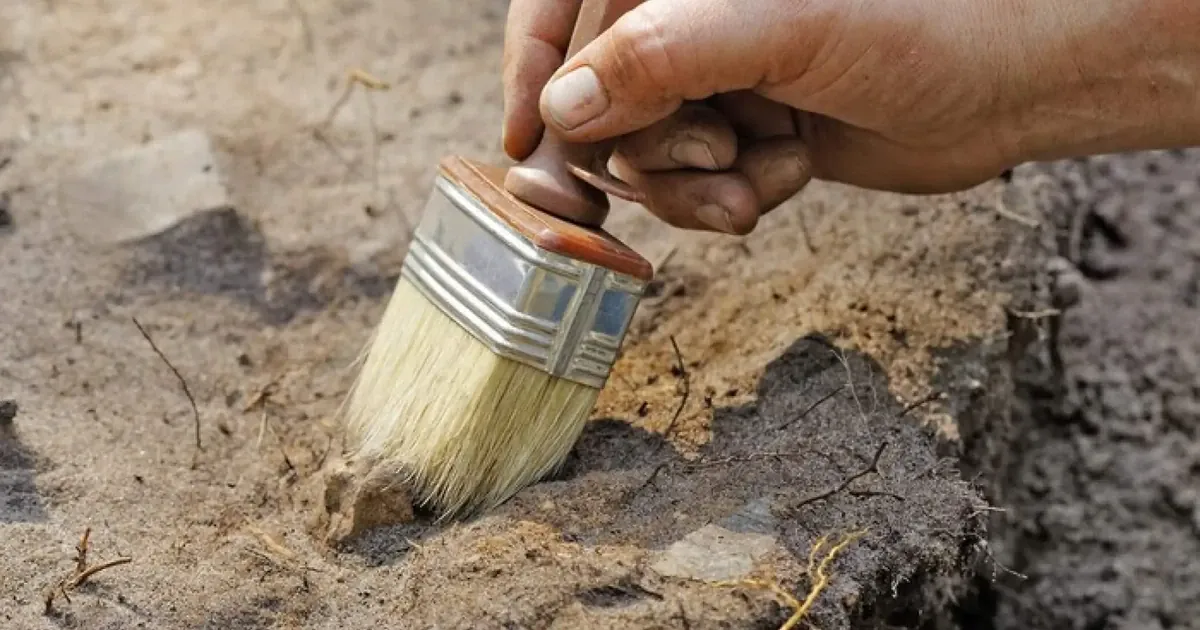
First-year Newcastle University students undertaking their first archaeological excavations in northern England have discovered rare Roman-era artifacts, including a golden chain and a gemstone depicting Jupiter.
 🎓Education
Photo: TSN
Key points
- Newcastle students find Roman artifacts
- 2,000-year-old gold chain discovered
- Excavations held near Hadrian's Wall
First-year students at Newcastle University in the UK stumbled upon a collection of valuable Roman Empire artifacts during their debut archaeological excavation. Among the most remarkable discoveries is a nearly perfectly preserved fragment of a gold chain that, after nearly two millennia, could still be worn as jewelry.
Roman treasures near Hadrian's Wall
The fieldworks took place in Redesdale, northern England, close to the famous Hadrian's Wall, which served as the northern frontier of Roman Britain. The research is part of a long-term academic project studying the remains of ancient settlements in the region.
On her very first day on site, student Eliza Zallu uncovered a gold chain fragment measuring about 7 centimeters. Crafted using the loop-in-loop technique typical of high-end Roman jewelry, such pieces were usually made of pure gold and worn by high-ranking military officials and their families. Another freshman, Shannon Wood, found a folded piece of lead bearing traces of a Latin inscription.
Valuable discoveries and their scientific significance
Over the following days, the student expedition uncovered further significant items. Megan Potter found a gilded Roman military strap fitting, likely used for armor, horse harness, or a sword scabbard. Later, Maisie Whatmough and Zoe Yuill discovered a carnelian intaglio—a gemstone engraved with an image of Jupiter, the supreme Roman god.
- Roman period gold chain
- Lead fragment with Latin text
- Gilded military hardware
- Carnelian intaglio depicting Jupiter
Project leaders emphasize that the value of these artifacts lies not only in their age and preservation, but also in their ability to shed light on the lives of ordinary people and borderland interactions between Roman forces and local communities.
Source TSN — tsn.ua/tsikavinki/pershokursnytsi-rozkopaly-skarby-vikom-2000-rokiv-shc… ↗
Read next
 🏙️City
ISW analysts explain the impossibility of humanitarian evacuation from Kostiantynivka
The Institute for the Study of War analyzed Russia's proposal for evacuation from Kostiantynivka, citing geographical and strategic obstacles.
 💼Economy
Another Attack on Novoshakhtinsk Oil Refinery: Impact on Fuel Supply
On the night of November 23, the Novoshakhtinsk Oil Refinery in the Rostov region was struck. The facility is a major supplier of fuel for the Russian military.
 🚨Events
Shooting in Kharkiv leaves one man dead: police launch special operation
A shooting incident occurred in Kharkiv on the evening of November 22, resulting in a fatality. Local police have initiated a special operation to track down those respon…
 🚌Transport
Wreckage of latest Russian missiles found in Poland: incident details
Fragments of Kh-101 cruise missiles, manufactured in late 2026, were discovered in eastern Poland, prompting an urgent NATO Council meeting.
 🏙️City
Charity auction in Lviv region raises UAH 60 million for Ukrainian defenders
A charity auction in the Lviv region has successfully raised funds for drone procurement and the rehabilitation of wounded soldiers.
 🚨Events
Russian missiles and drones violate Polish airspace: incident details
Polish authorities have labeled the incident a deliberate provocation after Russian munitions fell in the southeast of the country during massive strikes on Ukraine.