Monumental Tombs from the Era of King Herod Discovered in Palestine
Archaeologists have found three ancient burial complexes near Jericho dating back to the reign of King Herod, containing rare wooden and textile artifacts.
 🎓Education
Photo: UNIAN
Key points
- Three monumental tombs dating back about 2,000 years were discovered
- Rare wooden coffins, textiles, and limestone sarcophagi were uncovered
- The burials date to the era of King Herod and the Jerusalem aristocracy
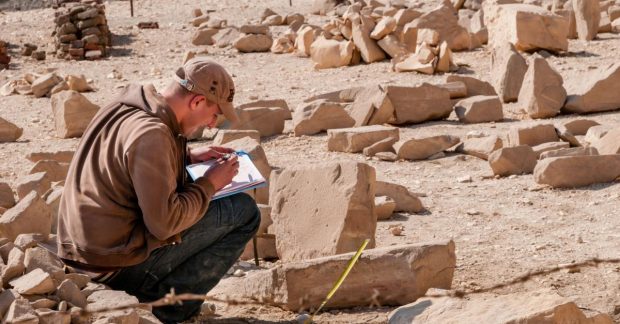
An archaeological mission from Rome's Sapienza University, in cooperation with the Palestinian Ministry of Tourism and Antiquities, has made a significant historical discovery. Near ancient Jericho, researchers uncovered three monumental burial complexes dating back approximately two thousand years. According to scientists, these tombs were built during a period when the city was considered one of Judea's most important centers, second only to Jerusalem.
Unique Finds and the Evolution of Burials
The discovered structures are carved into limestone cliffs at the foot of the Mount of Temptation. Each complex consists of a central chamber with burial niches branching off the walls. Given the scale of the structures and the artifacts found, experts suggest they belonged to wealthy families, including the Jerusalem aristocracy. Organic materials such as wooden coffins, limestone sarcophagi, and textile fragments represent particularly valuable finds for researchers.
Researchers note that the burials reflect changes in funerary traditions over time. Initially, the deceased were placed in wooden coffins, a practice that lasted until around 6 AD, after which ornate limestone sarcophagi became prevalent. The exceptionally well-preserved organic materials provide scholars with insights into ancient daily life and burial rituals during the era of Herod the Great, who maintained winter palaces in Jericho.
Head of the archaeological mission Lorenzo Nigro emphasized that the discovery allows researchers to directly study communities described by the ancient Roman historian Josephus Flavius. Excavations are still ongoing, and scientists continue to analyze human remains and associated objects to definitively determine the origins and identities of those interred.
Source UNIAN — unian.ua/science/u-palestini-viyavili-grobnici-epohi-iroda-shcho-zd… ↗
Read next
 🚨Events
Electricity Restored in Rivne Region After Russian Attack
Electricity has been restored in the Rivne region after a Russian attack caused widespread power outages. The head of the Rivne Regional Military Administration, Oleksand…
 🎭Culture & Sport
Rose care in autumn: tips for gardeners in Sloviansk
Experts explain why it is better to avoid radical pruning of roses until steady frosts arrive.
 🇺🇦Ukraine
Estonia affirms Ukraine's right to self-defense following incident in Gulf of Finland
Estonian Foreign Minister Margus Tsahkna stated that the strike on a Russian vessel is a consequence of Russia's aggression, emphasizing Ukraine's right to defend itself.
 🛡️Security
89-year-old woman rescued from rubble of destroyed building in Dymer
Rescue teams are clearing debris after a drone strike on a residential building in the Kyiv region. The death toll has risen to nine.
 🇺🇦Ukraine
Media report potential strike on Russian corvette 'Mercury' in Libya by Ukrainian drones
A Russian warship was reportedly damaged in Benghazi following an explosion, potentially caused by a drone attack.
 🏙️City
Russian Provocations in NATO Airspace: Military Expert Assessment
Retired Ukrainian Colonel Dmytro Kashchenko explains that Russian airspace violations are a calculated attempt to test NATO's defensive response algorithms.