Scientists create 'planimal' cell hybrids: A leap in genetic research
An international research team has successfully combined genetic material from hamster cells and red algae, creating stable hybrid structures.
 💡Tech
Photo: TSN
Key points
- Scientists merged hamster and algae cells
- Hybrids retain DNA after 155 divisions
- Most algal genes remain inactive
Researchers from the University of Tokyo have conducted a breakthrough experiment by merging Chinese hamster cells with single-celled red algae. The resulting laboratory hybrids, dubbed "planimals" (a portmanteau of plant and animal), have demonstrated the ability to retain foreign DNA through more than 150 cell divisions.
The technology behind the hybrids
To achieve successful membrane fusion, scientists utilized polyethylene glycol, a method found to be highly efficient. As a result, nearly the entire nuclear genome of the algae was integrated into the hamster cells. Professor Sachihiro Matsunaga stated that this confirms the possibility of stable genetic material transfer between evolutionarily distant organisms.
Despite the successful integration, most of the algal genes remain dormant due to the protective epigenetic mechanisms of the mammalian cells. Currently, these hybrids cannot perform photosynthesis as they lack functional chloroplasts. Future research will focus on selectively activating these genes to potentially grant animal cells new properties, such as energy production from light.
Source TSN — tsn.ua/nauka_it/hibryd-roslyny-ta-tvaryny-vze-realnist-navishcho-vcheni… ↗
Read next
 🇺🇦Ukraine
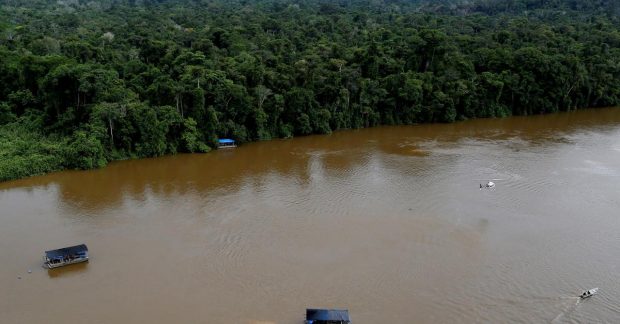
Scientists warn of critical threat to Amazon rainforests due to climate change
Research on ancient sediments reveals that human activity combined with the El Niño climate phenomenon is threatening the survival of the world's largest tropical forest.
 💼Economy
Finland Seeks Over €25 Billion in Compensation from Russia and Gazprom
Finnish enforcement authorities are processing unprecedented claims for billions in damages against Russian entities.
 🧠AI Analysis
Donald Trump shares photos with Vladimir Putin on social media
US President Donald Trump has released a series of photos from meetings with world leaders, captioning an image with Vladimir Putin as "my friend."
 🏙️City
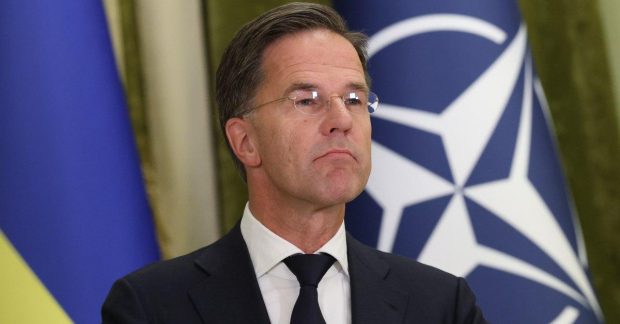
NATO pledges to defend 'every inch' of Polish territory following airspace incidents
NATO Secretary General Mark Rutte has affirmed the Alliance's commitment to Poland's security after reports of Russian objects breaching its airspace.
 🛡️Security
Series of Nighttime Explosions and Alerts Across Russian Regions: Incident Details
On the night of November 22, a series of explosions, smoke at infrastructure facilities, and air raid alerts were reported in Russia's Krasnodar Krai and Kaliningrad Obla…
 🏙️City
Escalation in the Middle East: Bahrain reports Iranian attack on industrial facility
Bahrain reported a fire at a civilian facility following an Iranian strike, while the IRGC claims an attack on U.S. bases.